
Pinhole Leak Detection & Repair
Smyrna's soft Chattahoochee surface water and aging 1960s-to-2000s copper produce a specific corrosion pattern. We find pinhole leaks before they soak the wall.
Call (770) 214-4545 | 24/7Licensed in Georgia | Cobb County | (770) 214-4545
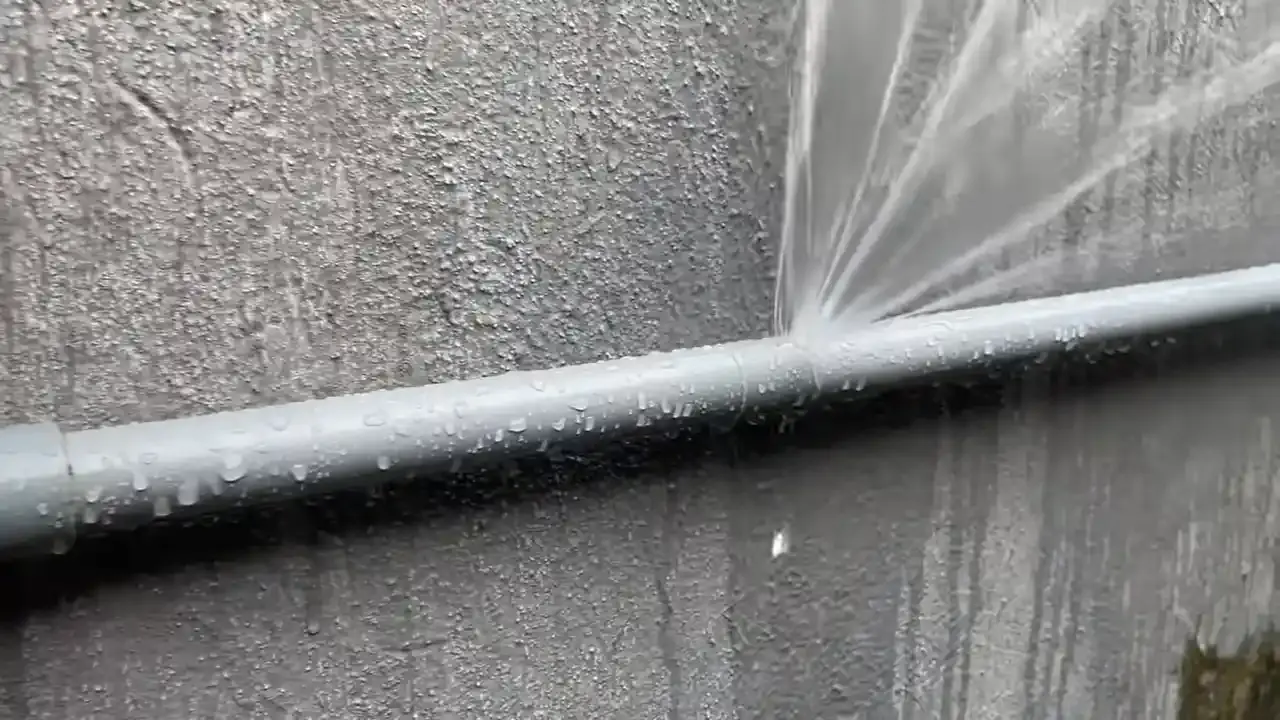
Pinhole leaks in Smyrna copper pipe come from a different mechanism than in most markets. Plumbers who work primarily in hard-water cities learn to blame scale buildup from mineral-rich groundwater for copper failures. That diagnosis is wrong for Smyrna. The City of Smyrna draws surface water from the Chattahoochee River and Lake Allatoona through the Cobb County-Marietta Water Authority. Surface water carries far less dissolved mineral content than limestone-aquifer groundwater, giving Smyrna water a hardness of around 38 milligrams per liter. That is the softest supply in our 50-site service network.
Soft water at the wrong pH and alkalinity becomes mildly aggressive toward copper pipe over time. Combined with chloramine disinfection, which the water authority uses instead of free chlorine, and the natural aging of copper installed in the 1960s through the 1990s, the result is pitting corrosion from the inside of the pipe wall outward. The pits eventually breach the pipe wall and produce pinhole leaks: tiny failures that release enough water to soak wall cavities and subfloor assemblies without being audible or visible until damage is extensive.
The age-and-chemistry failure mechanism is covered in depth in a companion resource on this site. Ask us about it when you call, or review it after visiting our resources section.
Which Smyrna Neighborhoods Are in the Pinhole Risk Window
The failure timeline for Smyrna copper supply runs roughly 35 to 55 years from installation. That puts the current highest-risk cohort in the 1960s-to-1990s construction band:
- Walker Park Smyrna and Highland Park Smyrna: 1960s and 1970s construction, copper supply now 50 to 65 years old. This cohort is well into its failure window and produces the majority of our pinhole detection calls.
- Argyle, Reed Mill, Spring Road area: 1970s and 1980s construction, copper now 40 to 55 years old. Many homes in this range are approaching or entering the active failure window.
- Wynfield and Brookhaven Smyrna: 1990s construction, copper now 25 to 35 years old. Early-stage pitting is detectable in some homes in this cohort, particularly those with slightly more aggressive water chemistry at their service address.
Newer homes in Concord Place, the Market Village townhomes, and Vinings Smyrna developments from the 2000s onward typically have PEX supply systems, which do not develop the same pitting corrosion pattern. If your home is in this cohort and you are experiencing water leaks, the investigation should focus on fittings, connections, and drain lines rather than the supply pipe itself.
Know your Smyrna home has old copper? Call for a pinhole inspection before the next leak.
Call (770) 214-4545How We Detect Pinhole Leaks Behind Walls
Active pinhole leaks are often silent. The discharge rate through a pinhole breach can be less than a drip per minute, slow enough to stay below the threshold of audible detection and slow enough to evaporate from a warm wall cavity before it produces a visible stain. We use two primary tools to find them:
- Pressure decay testing: We isolate the supply system and monitor pressure over a timed interval. Pressure loss without any open fixture confirms an active leak somewhere in the system. We then isolate branch lines to narrow the location to a single run.
- Thermal imaging: A cold-water pinhole leak behind drywall shows up as a temperature anomaly on the thermal camera, particularly in Smyrna's warmer months when the ambient temperature differential is highest. We scan the wall cavity systematically before opening anything.
For acoustic detection, pinhole leaks at very low flow rates can be below the threshold of standard listening equipment. We combine pressure testing and thermal imaging to confirm the location before adding acoustic scanning as a secondary verification tool.
Pinhole Leak Repair vs. Whole-House Repipe
The right repair depends on whether the pinhole is an isolated failure or a sign of systemic copper degradation across the supply system. We assess this honestly:
- A single pinhole in an otherwise sound pipe run, confirmed by pressure testing on isolated branches, is worth repairing in place. We open the wall at the pinhole location, replace the damaged section, and close up.
- Multiple pinholes in the same system, or a pattern of prior repairs showing repeated failures at different locations, indicates a supply system that has entered systemic corrosion. At that stage, patching the next pinhole is a short-term fix. A whole-house repipe with PEX eliminates the failure mode rather than chasing it from leak to leak.
We give you a clear recommendation and the cost comparison for both approaches. There is no financial incentive for us to recommend one over the other, so the recommendation follows what we actually find.
Frequently Asked Questions
Related work often surfaces during the same visit. We also handle Walker Park homes where 1960s copper is now at the peak pinhole window in Smyrna and Cobb County.
Soft water protects against scale buildup, which is a mineral deposit problem. It does not protect against corrosion from within. At certain pH and alkalinity ranges, soft water is slightly more aggressive toward copper than moderately hard water, because moderate hardness deposits a thin protective carbonate layer on the pipe interior. Smyrna's Chattahoochee surface water, treated with chloramine, can be corrosive to copper pipe at the chemistry levels the water authority targets for health and distribution reasons.
A temporary patch with a repair clamp can slow a pinhole leak long enough to schedule a professional repair, but it is not a permanent fix and does not address the underlying corrosion. Copper soldering requires a licensed plumber in Georgia and involves shutting down the water system and working in confined wall cavities. Call (770) 214-4545 and we can usually get to a Smyrna address the same day.
There is no universal number, but two or more pinholes in the same supply system within a 12-month period strongly suggests systemic corrosion rather than isolated failure. The cost of repeatedly opening walls, patching, and repairing water damage typically exceeds the cost of a whole-house repipe within two to three repair cycles.
Pressure decay testing and thermal scanning of a typical Smyrna home takes 60 to 90 minutes. We confirm the leak location before opening anything, so the total job time from arrival to a confirmed repair location is usually under two hours.
Questions about a leak in your Smyrna home? Call anytime.
Call (770) 214-4545