
Underground Leak Detection & Repair
Underground leaks in Smyrna's red clay yards hide for months before surfacing. Acoustic pipe locating and pressure testing find them without digging test holes.
Call (770) 214-4545 | 24/7Licensed in Georgia | Cobb County | (770) 214-4545
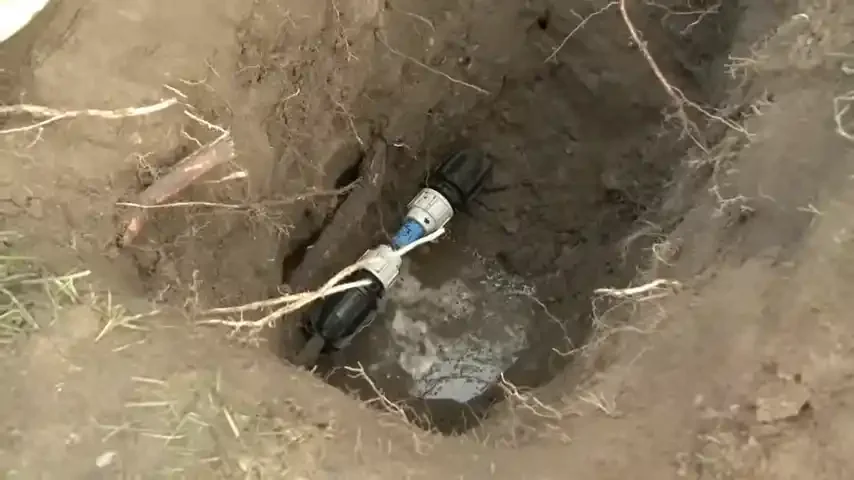
Underground leaks in Smyrna cover several distinct pipe systems: the main water service line from the meter to the house, irrigation and sprinkler supply lines, yard drain systems, and the sewer lateral from the house to the street main. Each system has different pressure characteristics, different materials, and different detection approaches. What they share is the Georgia Piedmont red clay that surrounds them all, which holds moisture, distributes water laterally, and makes visual surface inspection an unreliable guide to the actual leak location underground.
In Smyrna's established neighborhoods, the mature tree canopy that makes the city distinctive also creates the most aggressive root environment for buried pipe systems. The large oaks, pines, and other trees in Belmont Hills, Walker Park, and Highland Park Smyrna have root systems that extend well beyond their canopy and actively seek any underground moisture source. A joint gap of a few millimeters in a sewer lateral or irrigation line provides enough moisture signal to attract roots within months.
Underground Detection Methods We Use in Smyrna
- Pipe locating: We trace buried pipe paths electromagnetically to map the line route and depth before beginning any detection scan. This is essential in Smyrna's older neighborhoods where original as-built drawings are often unavailable and pipe routing is not always intuitive.
- Acoustic ground microphones: Sensitive ground-contact microphones listen for the characteristic sound of water escaping a pressurized underground pipe. We walk the pipe path systematically, comparing signal strength at each test point. Georgia red clay transmits the acoustic signal with some lateral scatter, which we account for in the location algorithm.
- Pressure decay testing: For pressurized lines (supply and irrigation), we isolate the section and monitor pressure loss over a timed interval. This confirms an active leak and gives us a loss rate that helps size the breach before excavation.
- Tracer gas detection: For situations where acoustic detection is inconclusive, helium tracer gas is introduced into the pipe system. Helium migrates through soil quickly and is detected at the surface with a sensitive gas sniffer, providing a precise location independent of acoustic signal.
These same underground methods apply to buried gas service lines as well as water lines. If the suspected leak is on the gas side rather than the water side, see our gas leak detection and repair page for the utility coordination steps involved.
Wet area in your Smyrna yard with no obvious source? Call for underground detection.
Call (770) 214-4545Underground Irrigation Line Leaks
Irrigation system leaks in Smyrna yards are common enough to be a distinct service category. Most irrigation systems in Smyrna's residential developments were installed in the 1990s through the 2010s. The lateral lines are typically Schedule 40 PVC or polyethylene tubing, both of which develop joint failures, head riser cracks, and, in red clay soil, stress cracks from the clay's seasonal movement. An irrigation leak that runs between watering cycles inflates the City of Smyrna water bill but is easy to confuse with normal irrigation water use.
We isolate and pressure-test irrigation zones to identify leaking sections, then locate the break with acoustic equipment or by sequential zone isolation. In Smyrna's sloping yards, irrigation leaks on upper zones can surface visually in lower areas due to subsurface water migration through the clay, which further complicates visual location. Dedicated irrigation and sprinkler system leak detection covers the zone-by-zone diagnostic process in detail.
Sewer Lateral Underground Leaks
The sewer lateral from the house to the street main is a gravity-flow system that runs at low pressure and is not testable with standard pressure decay methods. Underground sewer lateral leaks are diagnosed with camera inspection, which visually identifies cracks, root intrusion, joint separation, and pipe collapse. In Smyrna's older neighborhoods with cast-iron laterals from the 1950s and 1960s, internal corrosion is often visible on camera as pitting and thin-wall areas before through-wall failure occurs. See the sewer line leak detection page for the full lateral investigation process.
Frequently Asked Questions
The key difference is location and persistence. Normal Georgia soil stays moist throughout the rainy season, but a consistently soft or wet area in a specific spot that does not dry out even during dry periods, particularly if it traces along a pipe run path, strongly suggests an underground leak. The water meter test with the house main off confirms whether a pressurized line is involved.
Our acoustic and electromagnetic detection methods require no ground penetration. We place surface contact microphones on the soil and walk the pipe path. Excavation happens only at the confirmed leak location, which is typically a single 2-to-4-foot opening rather than a trench along the full pipe run. Sod is cut cleanly and replaced after the repair.
Detection typically takes one to two hours depending on the pipe length and system complexity. Excavation and repair at the confirmed location usually adds another two to four hours depending on depth and pipe material. We give you a full time estimate after the detection phase.
It makes visual assessment unreliable because clay migrates water laterally, so a surface wet spot can be several feet from the actual breach. It does not significantly affect acoustic detection accuracy because we work from the pipe path rather than the surface wet location. Proper locating before acoustic scanning is the key step.
Questions about a leak in your Smyrna home? Call anytime.
Call (770) 214-4545