
Copper Pipe Leak Detection & Repair
Smyrna's 1960s-to-1990s copper runs on soft Chattahoochee surface water, not hard groundwater. That distinction changes how the copper corrodes and how we find the leaks.
Call (770) 214-4545 | 24/7Licensed in Georgia | Cobb County | (770) 214-4545
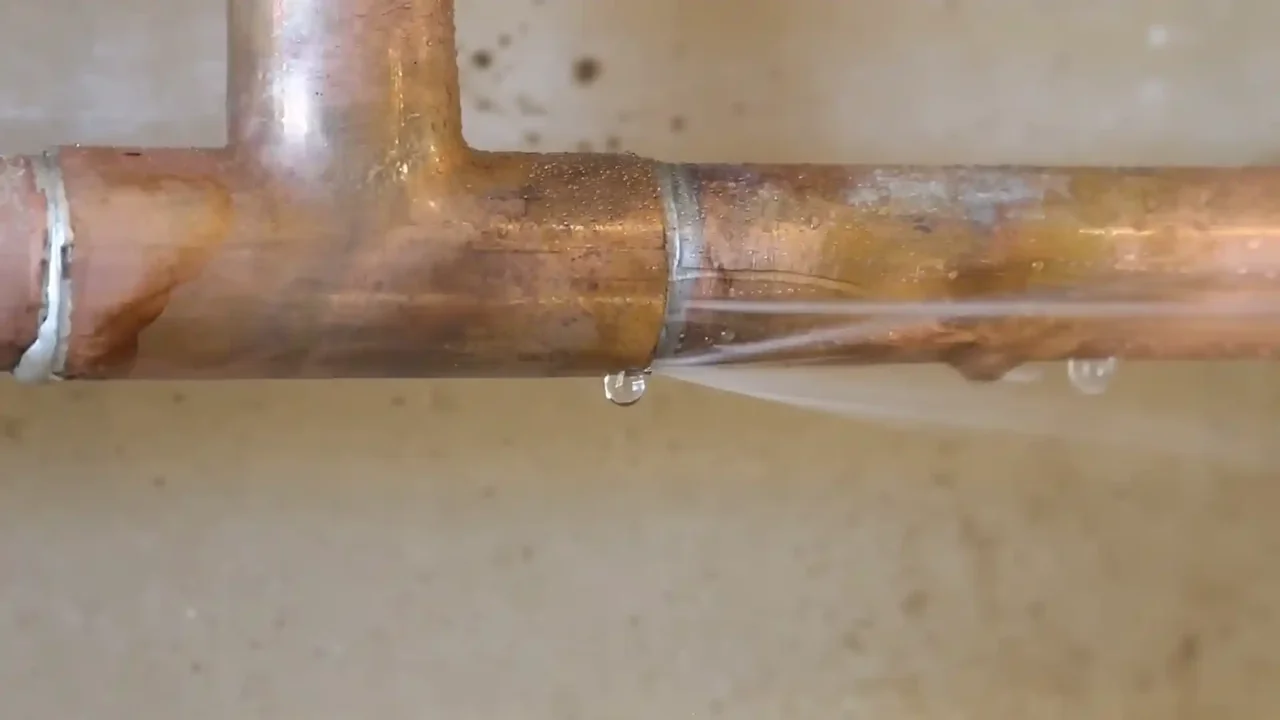
Copper pipe leaks in Smyrna have a specific character that separates them from copper failures in most other markets. The standard explanation for copper pinhole leaks in the plumbing industry centers on hard water: calcium and magnesium carbonate deposits that build up inside the pipe create a pitting environment on the pipe wall. That explanation is factually wrong for Smyrna. The City of Smyrna draws surface water from the Chattahoochee River and Lake Allatoona through the Cobb County-Marietta Water Authority, not from limestone-aquifer groundwater. That surface water tests at approximately 38 milligrams per liter of hardness, the softest supply in our 50-site service network.
Soft surface water does not deposit scale inside copper pipe. What it can do, at the wrong pH and alkalinity levels and in combination with chloramine disinfection, is become mildly aggressive toward copper pipe over time. The result is electrochemical pitting that corrodes the pipe wall from the inside outward rather than building up on the pipe interior. The chemical mechanism is different from hard-water scale-driven pitting, and so is the progression: it tends to be more evenly distributed along a pipe run rather than concentrated at specific deposit locations. This is why multiple pinholes in the same copper branch are common in Smyrna's mid-century homes, and why we treat repeated pinhole repairs differently here than in a hard-water market.
Which Copper Pipes Are at Risk in Smyrna
Copper supply line failure risk in Smyrna correlates directly with pipe age and installation era:
- 1960s-1970s copper (Walker Park, Highland Park, Argyle, Reed Mill): Now 50 to 65 years old. Fully in the active failure window. These pipes have been in contact with Smyrna's soft, chloramine-treated surface water for decades and show the highest rate of pinhole failure we see across the service area.
- 1980s copper (Spring Road area, parts of Westwood Smyrna): Now 40 to 45 years old. Entering the active corrosion window. Fewer failures than the 1960s-70s cohort but increasing year over year.
- 1990s copper (Wynfield, Brookhaven Smyrna, Concord Place): Now 25 to 35 years old. Early-stage pitting is detectable in some homes in this cohort, particularly those with slightly more aggressive water chemistry at their service address.
Copper supply in a 1970s Smyrna home? Call for a pressure test before the next pinhole finds the drywall.
Call (770) 214-4545Detecting Copper Pipe Leaks in Smyrna Walls and Ceilings
Copper pinhole leaks are often silent at low flow rates and invisible until water has soaked through the drywall. We use a two-step process to find them without opening walls speculatively:
- Pressure decay isolation: We shut the system down and monitor pressure on the full supply system, then on hot and cold branches separately. Pressure loss confirms which branch contains the leak and gives us a loss rate that helps assess severity.
- Thermal imaging scan: Cold water from a leaking pipe in a warm wall cavity shows a temperature anomaly on the thermal camera. Hot water leaks show the inverse. We scan the branch run systematically before opening any surface.
For slab-embedded copper in Smyrna's mid-century slab-on-grade homes, the additional acoustic detection step using ground microphones on the concrete surface helps pinpoint the leak to within a few inches through the slab. See the dedicated slab leak detection page for the full under-slab process.
Repair vs. Repipe for Smyrna Copper Systems
We assess each copper system honestly. A single isolated pinhole in an otherwise sound pipe run is worth repairing in place. A pattern of prior repairs at different locations across the same system, or pressure testing that reveals multiple simultaneous leak points in the same branch, indicates that the copper has entered systemic failure. At that point, sectional patching is a short-term expense that eventually costs more than a whole-house repipe with PEX. We give you both options with realistic cost projections and let you make the call.
Frequently Asked Questions
Related work often surfaces during the same visit. We also handle the 60-second water meter test to confirm active copper corrosion loss in Smyrna and Cobb County.
Hard-water cities like Georgetown TX, which runs at over 400 mg/L, experience calcium carbonate scale deposits inside the pipe that create localized pitting at deposit sites. Smyrna's 38 mg/L soft surface water does not deposit scale, so there is no localized deposit driving point. Instead, soft water at certain pH levels is slightly more aggressive toward copper overall, producing more distributed pitting across a pipe run rather than concentrated at scale deposits. The visual pattern on a cut pipe section looks completely different.
No. Copper pipe in Smyrna's newest construction, installed since around 2000, has had less cumulative exposure to soft Chattahoochee water and shows minimal corrosion. The risk is concentrated in homes built in the 1960s through 1990s where the copper has had 25 to 65 years of contact with the water.
A water softener reduces hardness, but Smyrna's water is already soft. Adding further softening does not address the corrosion mechanism at work here. The relevant water chemistry factor is pH and alkalinity, not hardness. A whole-house water treatment assessment would look at those parameters specifically. Call (770) 214-4545 if you want our read on what we have found in similar homes.
Single pinhole or joint repair in an accessible location typically runs several hundred dollars including detection, access opening, repair, and close-up. A whole-house repipe with PEX is a larger investment that eliminates the failure mode. We provide flat-rate pricing before work begins.
Questions about a leak in your Smyrna home? Call anytime.
Call (770) 214-4545